
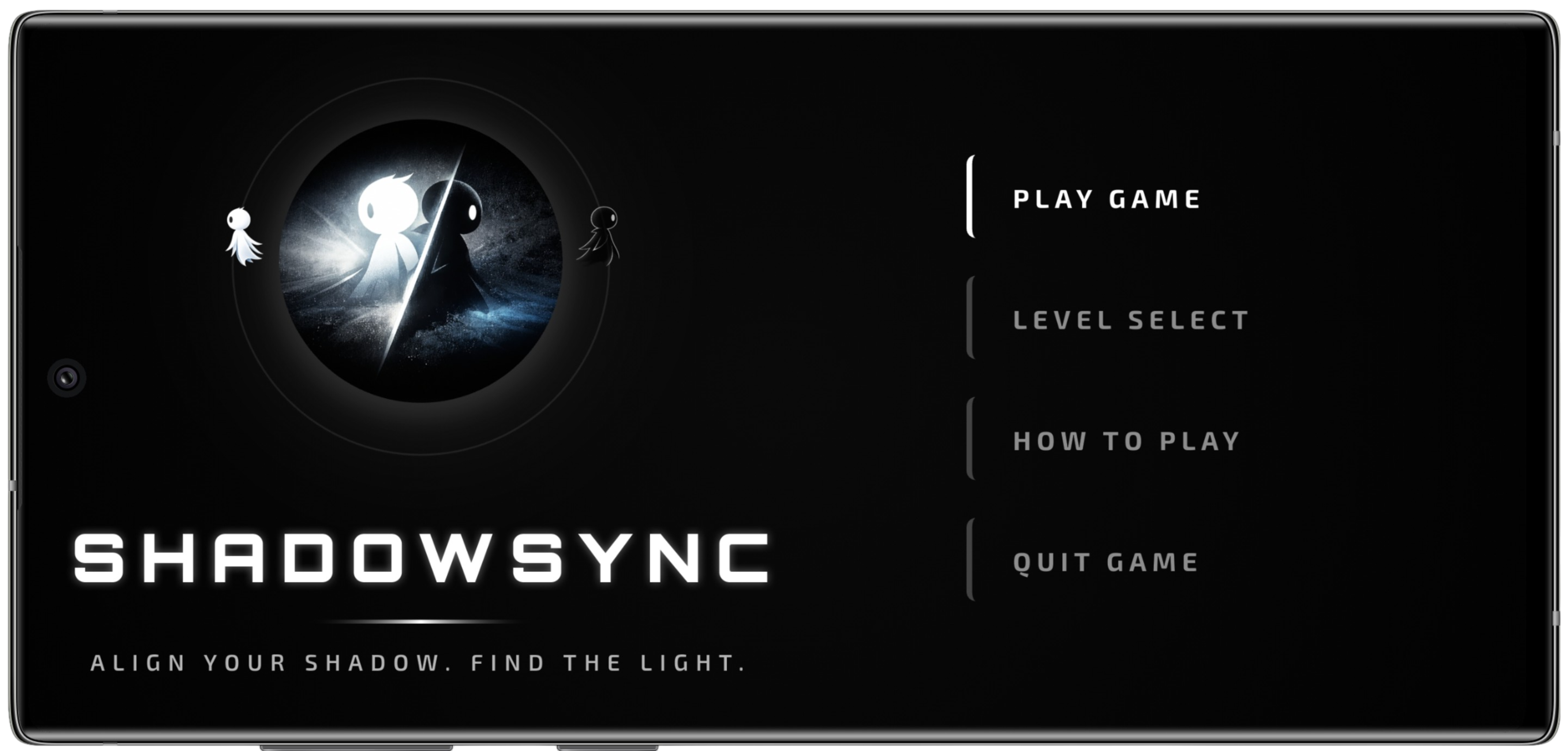
ShadowSync is a 2D puzzle-platformer game built using Flutter and Flame Engine. The game introduces a unique dual-world mechanic where the player controls a character and its mirrored shadow simultaneously. Players solve physics-based puzzles using synchronized movement, light reflection, moving platforms, and environmental hazards across progressively challenging levels.
ShadowSync was developed as a technically challenging puzzle-platformer designed to explore synchronized physics mechanics and creative puzzle logic. The core gameplay revolves around controlling both a player and its mirrored shadow simultaneously across two mirrored worlds. Each level introduces new mechanics such as rotating platforms, breakable surfaces, pushable obstacles, teleportation portals, lasers, mirrors, and light-based receivers. The game gradually increases complexity across 20 handcrafted levels, encouraging players to experiment, observe patterns, and master timing-based gameplay. The development focused heavily on performance optimization, physics consistency, responsive controls, and polished UI feedback to create a smooth and engaging player experience across different Android devices.
Project goals
Focused on building an engaging puzzle experience using synchronized mechanics, progressive level design, and interactive physics systems.
Create Unique Puzzle Mechanics
Design original gameplay systems that combine physics, movement synchronization, and environmental logic.
Maintain Smooth Gameplay Performance
Ensure consistent frame rates and responsive controls across a wide range of Android devices.
Design Progressive Difficulty
Introduce mechanics gradually across levels to balance challenge and player learning.
Deliver Engaging Player Feedback
Add sound effects, animations, and UI feedback to enhance immersion and gameplay clarity.
Features built around users
Unique puzzle mechanics designed to challenge logic, timing, and coordination across multiple interactive systems.
Dual World Synchronization
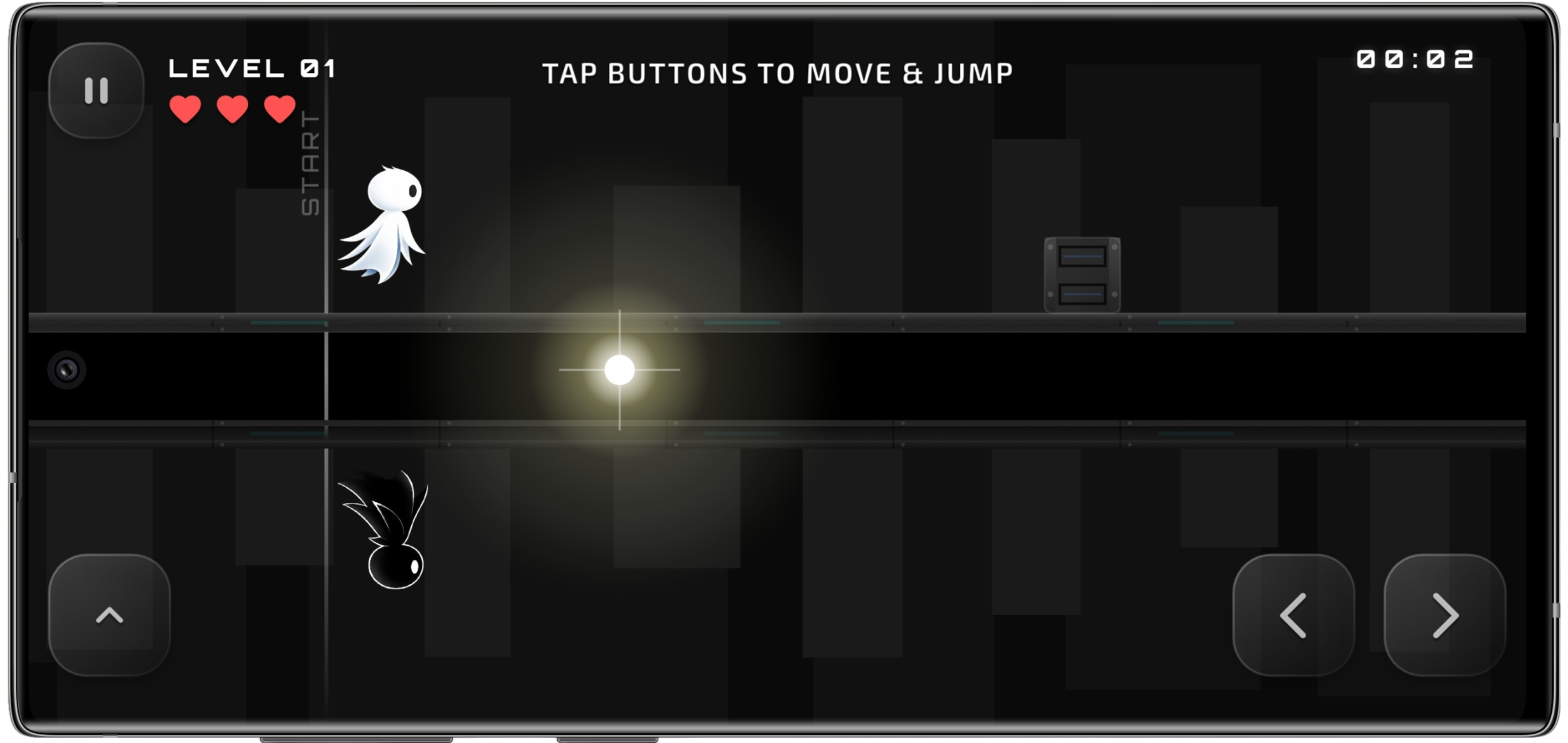
Players control both a character and its mirrored shadow simultaneously, requiring precise movement coordination across two environments.
Multiple Puzzle Mechanics
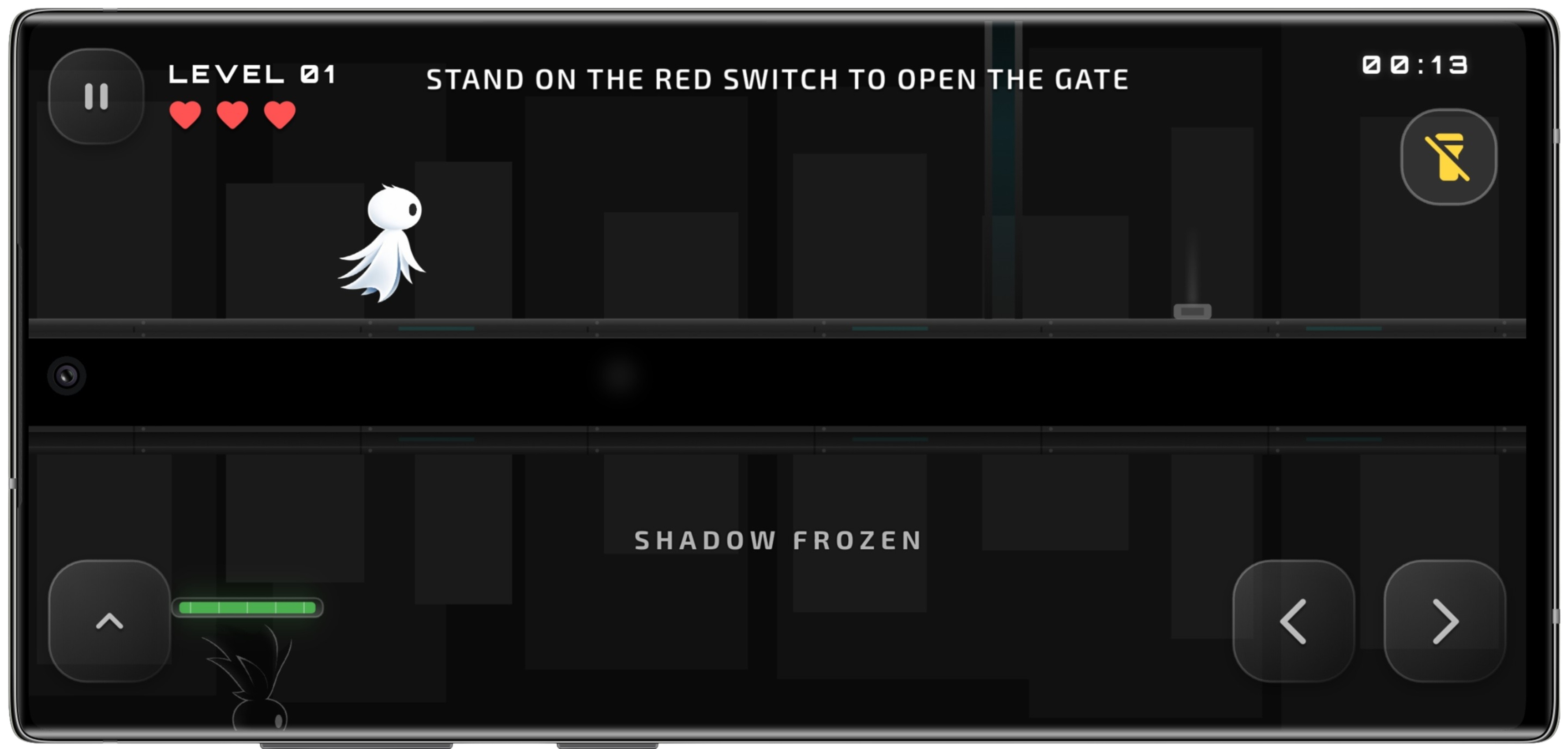
Levels include rotating platforms, teleport portals, pushable blocks, breakable platforms, lasers, mirrors, and light receivers.
Progressive Level Difficulty
20 handcrafted levels gradually introduce new mechanics and increase puzzle complexity to maintain engagement.
Checkpoint & Life System
Players can retry levels from checkpoints with limited lives, balancing challenge and accessibility.
Performance Optimized Gameplay
Smooth movement, stable collision detection, and optimized animations ensure consistent performance across devices.
Challenges and solutions
Complex physics interactions solved through modular game components and optimized collision handling.
Managing Synchronized Dual-Character Physics
Handling simultaneous movement between the player and shadow required precise synchronization logic. A mirrored coordinate system was developed to maintain accurate movement relationships across both worlds.
Designing Scalable Puzzle Mechanics
Each puzzle component was built as an independent module, allowing new mechanics such as portals, rotating platforms, and mirrors to be reused across multiple levels.
Maintaining Smooth Performance with Complex Interactions
Collision handling, animation effects, and physics updates were optimized to reduce lag and maintain stable frame rates during gameplay.
User experience decisions
Gameplay interactions designed to be intuitive while gradually increasing difficulty without overwhelming players.
Clear Visual Feedback
Animations, lighting, and sound effects help players understand puzzle interactions quickly.
Progressive Learning Curve
New mechanics are introduced gradually to avoid overwhelming players.
Responsive Controls
Movement and jumping physics were tuned for precision and predictability.
Minimal Interface Distraction
HUD elements were kept simple to maintain gameplay focus.
A lightweight and scalable technology stack optimized for smooth gameplay and mobile performance.
- Flutter
- Flame Engine
- Dart
Puzzle-Driven Development
A structured development workflow combining puzzle design, gameplay iteration, and continuous testing.
Game Concept Design
Designed the dual-world gameplay concept and initial puzzle mechanics.
Prototype Development
Built early gameplay prototypes to test synchronization and movement logic.
Level Design & Expansion
Created progressively complex puzzle layouts across multiple stages.
Testing & Optimization
Improved performance and resolved edge-case bugs through extensive testing.
Launch & Updates
Published the game and continued refining gameplay through updates.
Results and impact
Delivered a fully functional puzzle-platformer with smooth performance, engaging gameplay mechanics, and scalable architecture.
Completed 20 Playable Levels
Developed and released a full puzzle campaign featuring progressive mechanics and increasing complexity.
Stable Gameplay Performance
Optimized collision detection and animation systems to ensure smooth gameplay across devices.
Reusable Puzzle Architecture
Modular component design allows easy addition of new puzzle types and future levels.
Engaging Puzzle Experience
Balanced level design encourages logical thinking, timing precision, and experimentation.
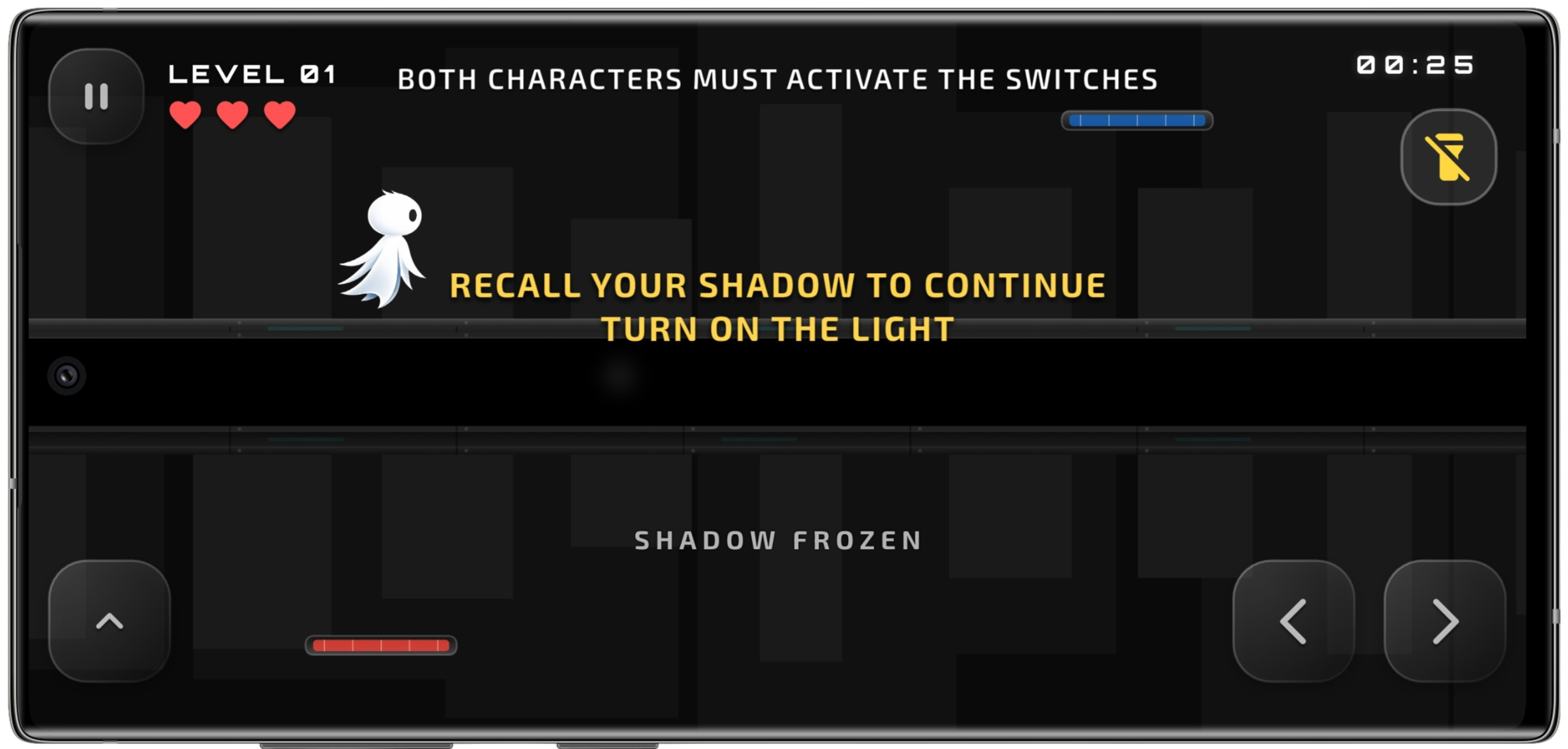
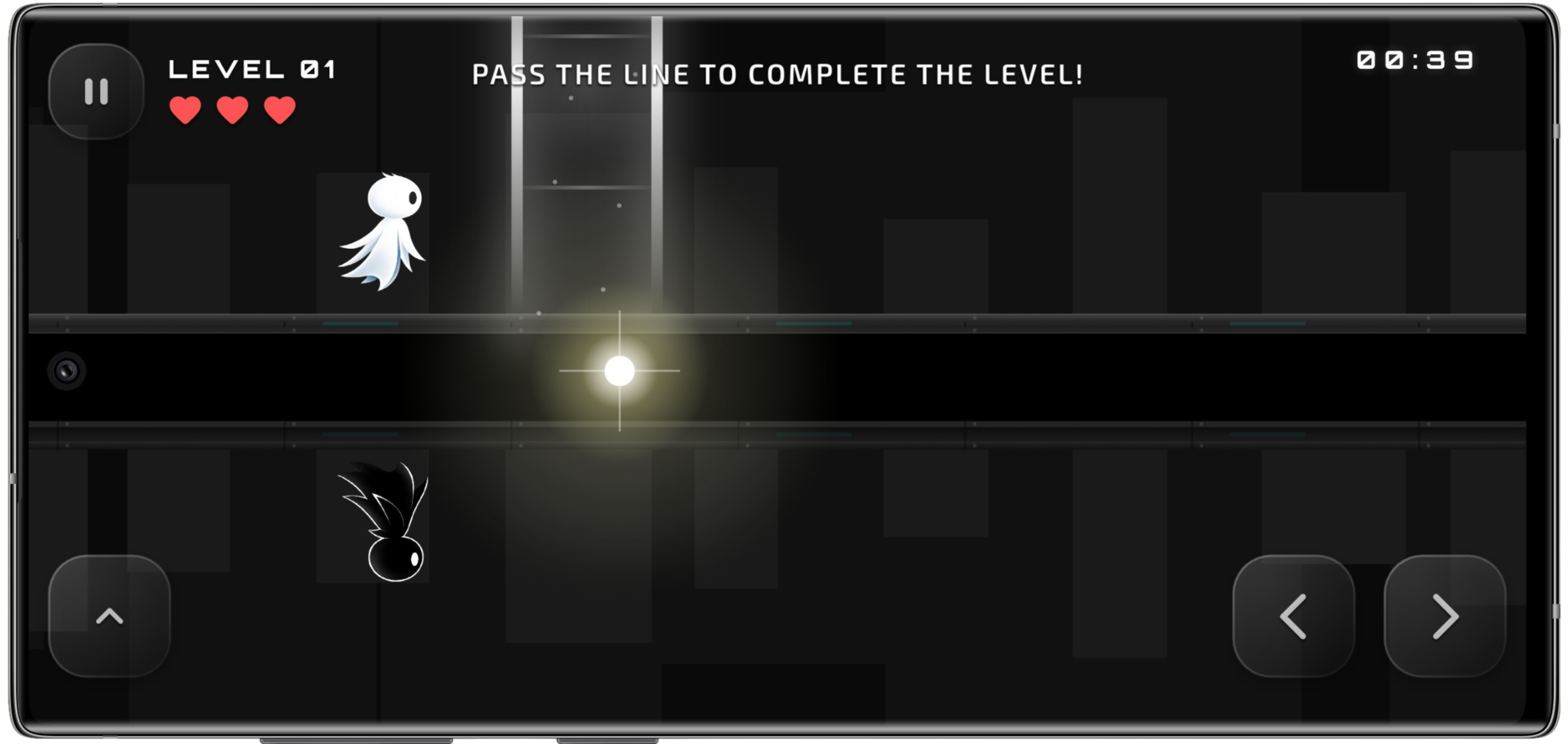
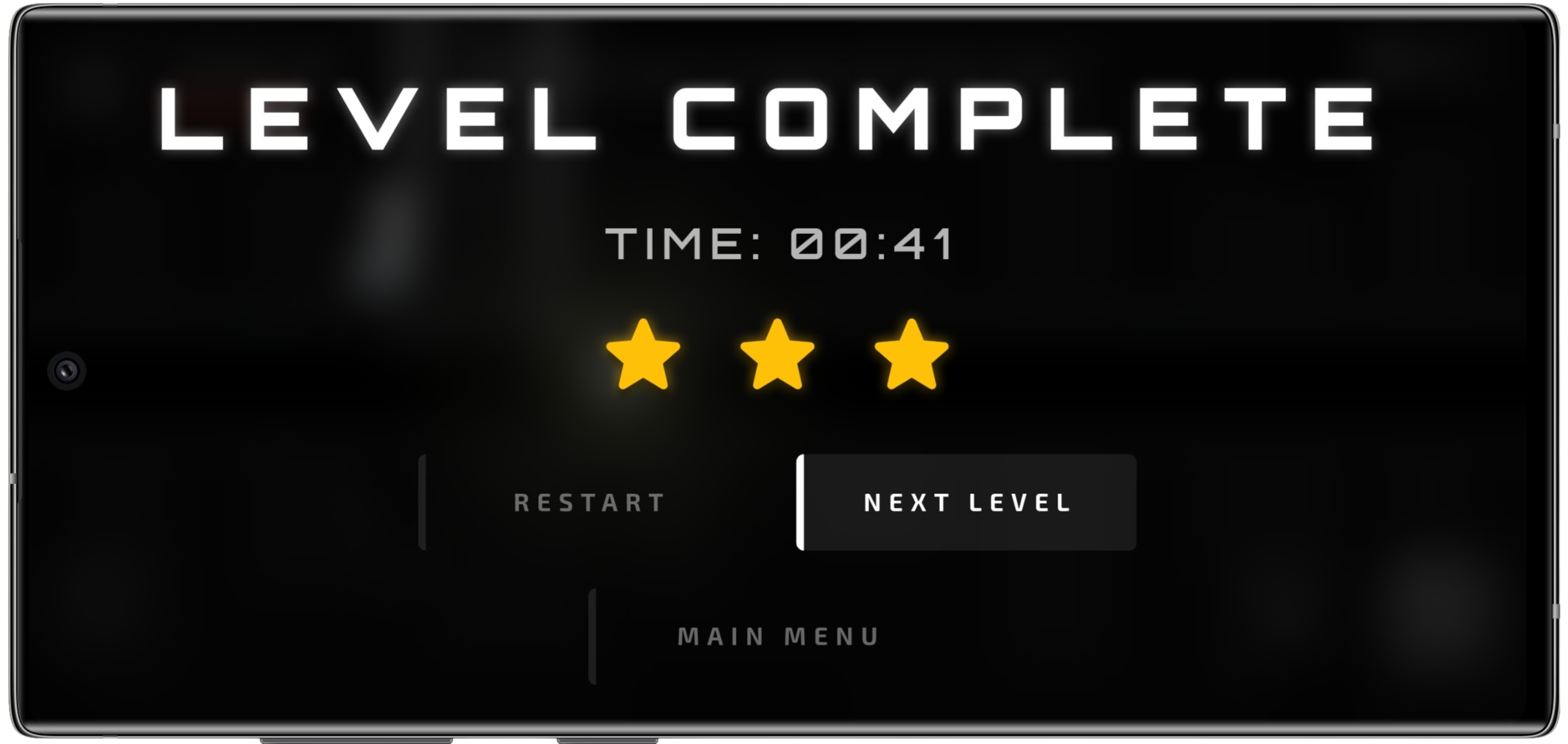
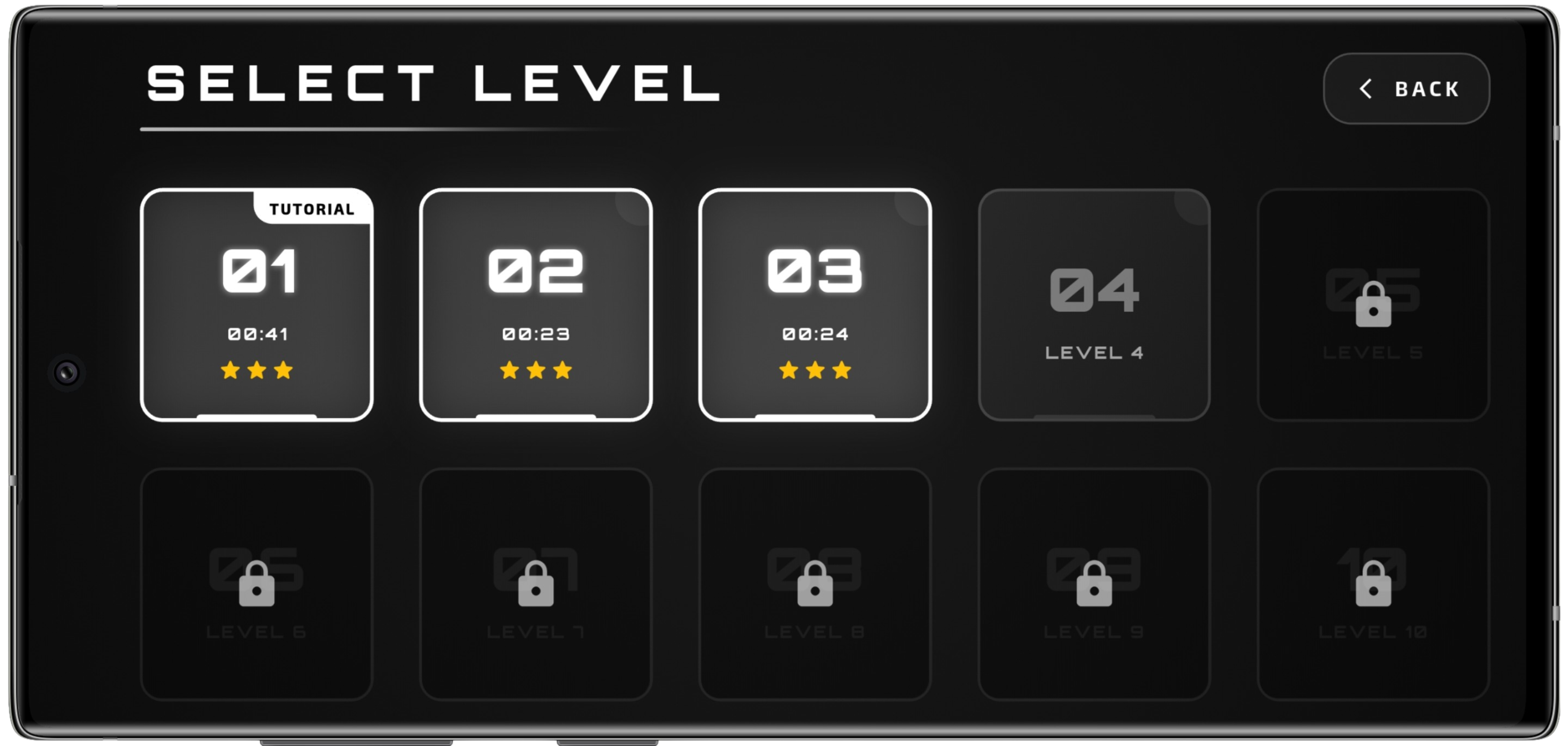
Carefully designed gameplay screens that highlight clarity, precision movement, and responsive visual feedback.
What comes next
Future improvements focused on expanding level content, adding new mechanics, and improving player retention features.
Additional Levels
Expand the game with new puzzle stages and advanced mechanics.
New Puzzle Types
Introduce additional environmental interactions and gameplay challenges.
Performance Enhancements
Further optimize gameplay responsiveness and device compatibility.
Cross-Platform Support
Extend the game to additional platforms such as web and desktop.