
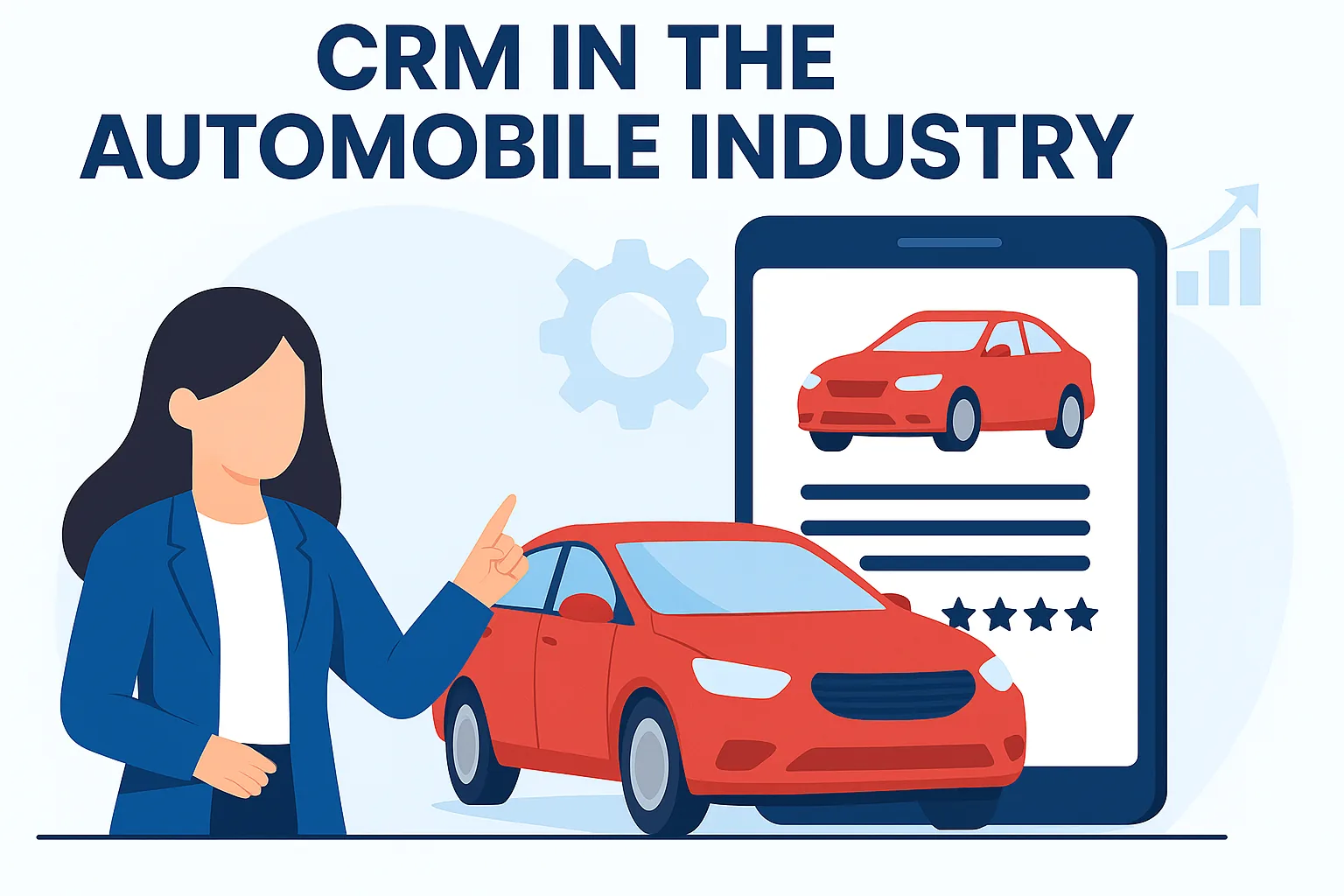
In today’s competitive auto market, customer relationships are just as important as the cars themselves. A smart CRM system helps dealerships and manufacturers offer personalized service, build trust, and drive revenue.
CRM solutions tailored for the automotive industry go far beyond contact management. They centralize customer data, track interactions across channels, and help sales and service teams provide a seamless experience.
When a prospect browses your website or visits a dealership, the CRM logs those activities. Sales teams can then follow up with personalized offers, schedule test drives, and manage the sales funnel efficiently.
Post-sale, the CRM continues to play a role—tracking service history, sending reminders for maintenance, and gathering feedback to improve satisfaction.
With integrations to inventory systems, the CRM ensures your team always has real-time insights into vehicle availability and pricing, speeding up decision-making.
AI-powered CRMs also enable predictive insights: when a customer is likely to return for a new car, what kind of upgrade they'd prefer, or when a vehicle might need maintenance.
In a digital-first world, automotive CRM is the engine behind customer loyalty and business growth.
Key CRM modules for car dealerships
A dealership’s CRM needs to support two businesses at once: vehicle sales, which is driven by leads and test drives, and after-sales, which depends on service visits and long-term loyalty. Generic CRMs often cover the first reasonably well but miss vehicle-specific data such as registration numbers, chassis numbers and service intervals.
Sales consultants also need a quick view of stock and pricing, while service advisors need ownership and warranty details at the counter. When both teams work from the same customer and vehicle records, the dealership can offer a consistent experience. The modules that tend to matter most include the following.
- Lead capture from websites, listing portals, walk-ins and calls
- Test drive scheduling linked to available demo vehicles
- Quotations, finance and exchange vehicle evaluation
- Vehicle records linked to owners, with full service history
- Service booking, reminders and job card tracking
- Insurance and warranty renewal follow-ups
Mapping the automotive customer lifecycle
Before configuring any software, map each stage a customer goes through with your business, from first enquiry to their next vehicle purchase years later. For each stage, note who is responsible, what information they need and what should trigger the next action. For example, a completed test drive might trigger a quotation within a day, while a vehicle delivery might trigger a feedback call and the first service reminder.
This map becomes the blueprint for your CRM’s pipelines, automations and reports, and it often reveals handoffs between sales and service where customers are currently forgotten. It also shows which channels matter at each stage, such as phone calls for new enquiries and WhatsApp for service updates.
For groups with several showrooms or workshops, the map should also cover how leads move between branches. A customer who enquires online might live closer to a different outlet, and a clear routing rule prevents leads from sitting unassigned. Branch-level dashboards then let managers compare response times and conversion without waiting for manual reports.
How to implement a CRM in a dealership
Successful dealership CRM projects pay as much attention to people and data as to software. Sales consultants and service advisors are busy, so the system must save them time, work well on mobile, and fit how they already deal with customers. A configurable CRM, such as the one Karma Technolabs builds, can be adapted to your dealership’s exact stages and forms rather than forcing your team into a generic process.
- Agree on lead sources, stages and follow-up rules
- Clean and import existing customer and vehicle data
- Integrate with your dealer management system and inventory
- Connect telephony, WhatsApp and email where possible
- Train staff by role, with short guides for daily tasks
- Review lead response and service retention reports monthly
Mistakes dealerships should avoid
A common mistake is treating the CRM as a reporting tool for management rather than a working tool for staff. If entering data feels like extra work, consultants will skip it and the reports become unreliable. Another is running sales and service in separate systems, which means service advisors cannot see a customer’s purchase history and sales teams miss upgrade opportunities. Finally, avoid sending generic bulk messages: reminders based on the actual vehicle, mileage and service date feel helpful rather than intrusive.
Data ownership is another common gap. When a sales consultant leaves, their leads and customer history should stay in the CRM rather than on a personal phone. Make sure calls, messages and notes are logged in the system, and set clear rules for reassigning leads so no customer is left without a contact person.
“CRM in the automobile industry isn’t just about sales—it’s about delivering an exceptional journey, mile after mile.”