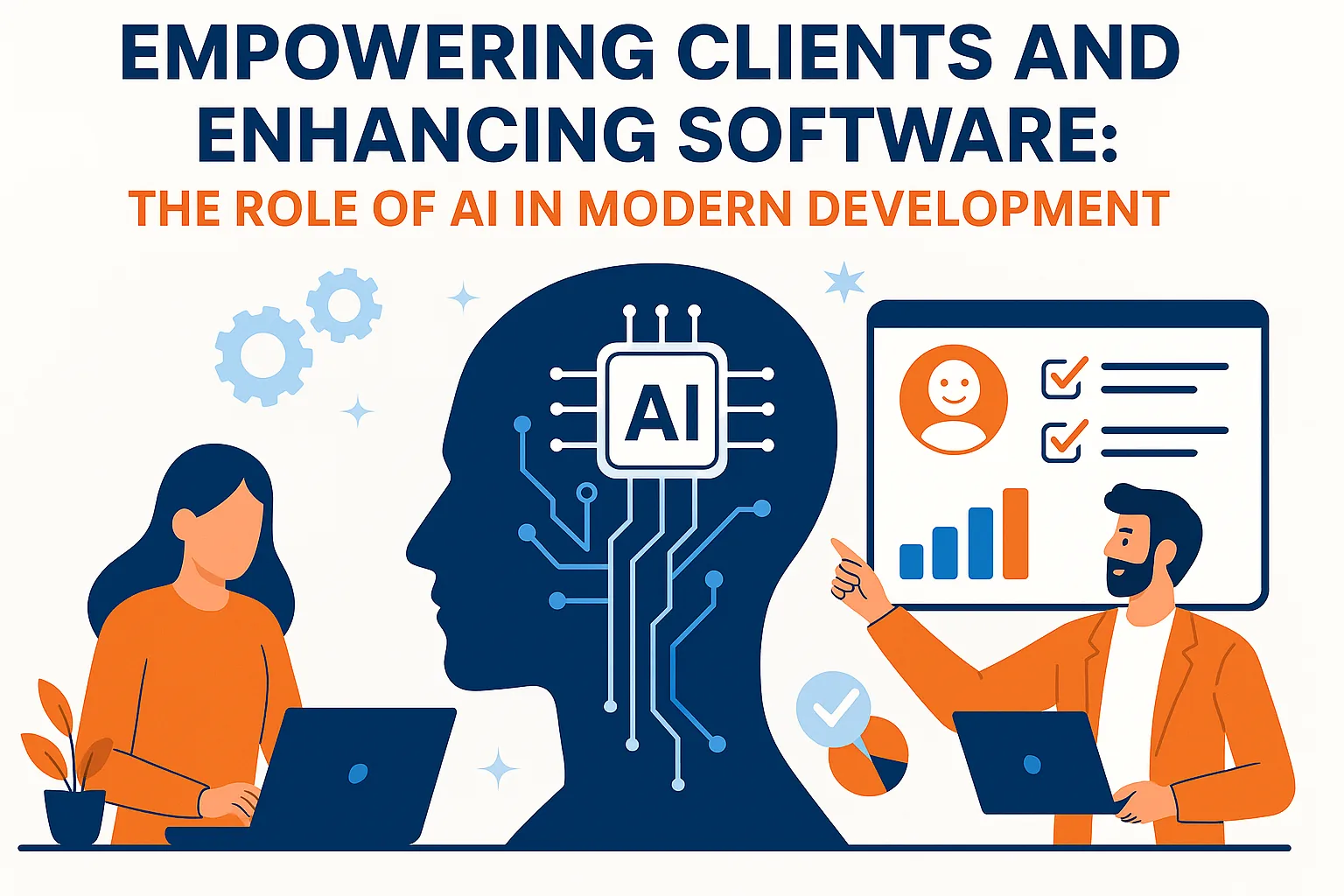


AI is transforming how software is built, tested, and maintained. By eliminating bottlenecks and enhancing productivity, it’s empowering teams to deliver better software faster.
AI has integrated itself into IDEs, offering real-time code completion, bug detection, and refactoring tips that drastically reduce development time.
Code generation tools like GitHub Copilot and TabNine are helping developers write boilerplate and even functional logic based on context.
On the testing side, AI enables automatic generation of test cases, early bug prediction, and even dynamic test maintenance based on code changes.
In DevOps, AI streamlines deployment pipelines, predicts failures, and can trigger proactive responses to outages or bottlenecks.
Beyond speed, AI contributes to better code quality, smarter architecture decisions, and a much more agile development environment.
Where AI helps most across the development lifecycle
AI tools are useful at almost every stage of a project, but their value differs. In planning, they help turn rough notes into user stories and spot gaps in requirements. During coding, assistants such as GitHub Copilot suggest code, explain unfamiliar files and help with refactoring. In testing, they draft unit tests and edge cases that developers then review.
The biggest gains usually come from well-understood, repetitive work, while novel architecture and business logic still need careful human thinking. In practice, AI shortens the distance between an idea and a working draft, but the draft still has to be shaped, reviewed and tested by people who understand the product and its users.
- Boilerplate code, data models and API clients
- Unit test drafts and test data generation
- Documentation, code comments and changelogs
- Explaining legacy code before a change
- Log analysis and incident summaries in operations
The limits and risks of AI-generated code
AI assistants can produce code that looks correct but contains subtle bugs, uses outdated library versions or calls functions that do not exist. They can also suggest insecure patterns, such as weak input validation, if the surrounding code does not guide them well. Every suggestion needs the same review you would give a junior developer’s pull request.
There are also data and licensing questions. Teams should check whether a tool sends source code to external servers, what the vendor does with it, and whether enterprise settings are available to keep proprietary code private. Clear internal rules help avoid pasting secrets, credentials or client data into prompts.
How to introduce AI tools to a development team
Rolling out AI tools works best with clear guidelines rather than a free-for-all. Start with a small group of experienced developers who can judge output quality, then share what works with the wider team. Keep existing quality gates, such as code review, automated tests and static analysis, so AI-written code goes through the same checks as everything else.
Expect a learning curve. Developers need time to learn when an assistant helps and when it slows them down, for example by producing long suggestions that take longer to check than to write. Agent-style tools that edit several files or run commands need tighter boundaries, such as working on separate branches and requiring human approval before changes are merged.
- Pick approved tools and configure privacy settings centrally
- Write a short policy on what code and data can be shared
- Keep code review and test coverage requirements unchanged
- Track cycle time and defect rates before and after adoption
- Hold regular sessions to share effective prompts and pitfalls
What AI-assisted development means for clients
For businesses commissioning software, AI-assisted development can mean faster prototypes, more thorough tests and quicker turnaround on routine changes. It does not remove the need for discovery, design and careful engineering, which remain the parts that decide whether a product succeeds. When evaluating a development partner, ask how they use AI, how they review its output and how they protect your code and data.
It is also worth discussing AI use in your contract or statement of work. Agree on who owns the code, which tools may process your source code, and how confidential data is protected. A good partner will be open about these points and will treat AI as one tool in a disciplined engineering process rather than a shortcut around it.
“AI won't replace developers, but developers using AI will replace those who don't.”